Gouldy v. Chiasson came down July 22. One opinion, two events. The Fourth District Court of Appeal affirmed a judgment of $65,662.23 against Rose Lannquist Gouldy, a pro se appellant, for the other side’s appellate attorney’s fees and costs, quantified after three days of evidence. And it announced a separate order to show cause why she should not be barred from filing pro se in that court again. Her brief, the court found on its first page, contained “frivolous arguments, misrepresentations of the record, a phantom case, and fake quotes from actual cases.”
Keep the two events apart, because the opinion braids them and the easy reading gets it wrong. The money is not a sanction for the fake citations. Gouldy owed the fees before the brief existed. The court fixed the entitlement in 2023, by mandate, under section 772.11(1) of Florida’s civil-theft statute. That was two years before the phantom case was typed. The July 22 opinion affirms the amount, nothing more. What the fabrications bought was the show-cause order.
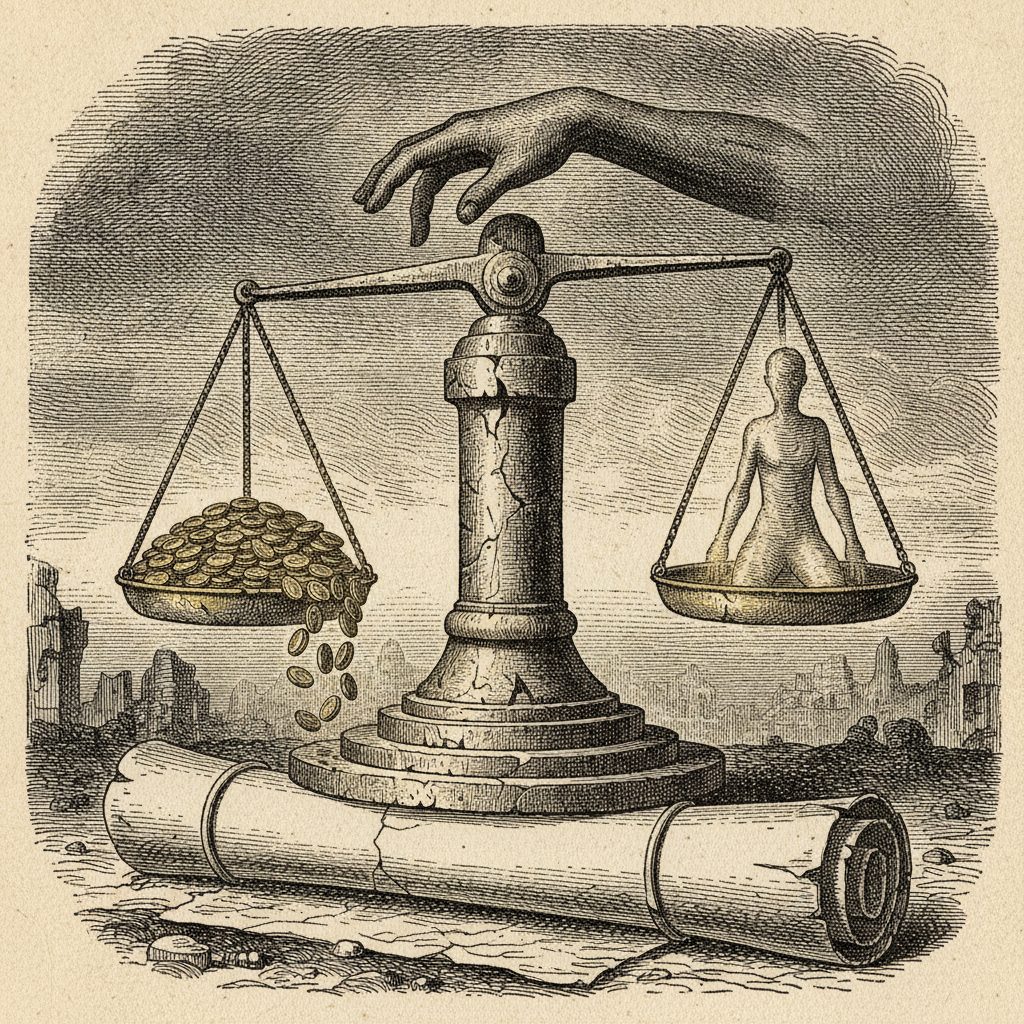
So the opinion is two documents in one envelope, a receipt and a summons. The money shows what a frivolous suit costs. The brief shows how she fought the bill.
The bill
The dispute began with a house. Gouldy was the personal representative of her late husband’s estate. She obtained probate authorization to sell the estate’s home to its tenants after representing that she was the only person with an interest in it. She was not. Her stepdaughters, the other beneficiaries, had the sale order vacated. The tenants, alleging they had made mortgage payments and improvements while they waited to buy, petitioned to surcharge her. Their lawyer was Timothy Chiasson.
Gouldy sued the tenants, and Chiasson personally. Fraud on the court, civil theft, economic extortion, tortious interference. Everything she alleged against Chiasson was something he did as opposing counsel. The trial court granted him summary judgment on litigation privilege, found the claims frivolous under section 57.105, and awarded him $13,980.00 in fees and $4,754.46 in costs. The Fourth District affirmed without opinion in 2023, granted Chiasson his appellate fees on the civil-theft count under section 772.11(1), and, as the 2026 opinion recounts, warned Gouldy by name that further frivolous filings could bring a bar on filing pro se. Everything after 2023 is quantification.
The statute is blunt about what follows a failed civil-theft claim. “The defendant is entitled to recover reasonable attorney’s fees and court costs in the trial and appellate courts upon a finding that the claimant raised a claim that was without substantial fact or legal support.” No safe harbor. No inquiry into the loser’s finances. The statute forbids one.
All that remained was the number. A three-day evidentiary hearing in September and November 2024. A fee expert who testified that $400 an hour sat below the market and who cut some of the claimed hours. Lodestar findings under Florida Patient’s Compensation Fund v. Rowe, 472 So. 2d 1145 (Fla. 1985), of $54,780.00 in fees and $10,882.23 in costs. Gouldy appealed the amount.
Her brief raised fifteen issues, “some containing subissues.” The court held every one “either unpreserved, improperly or inadequately presented, or meritless.” On the number itself, the court wrote, “The trial court found the appellate fees and costs of $65,662.23 to be reasonable, and this finding was supported by competent, substantial evidence.” That sentence exists partly because Gouldy told the court the award was $125,000. It was $65,662.23.
The brief
Then there are the citations.
The brief rests an argument on Barton v. McGovern, 302 So. 3d 1042 (Fla. 2d DCA 2020), and quotes from it. No Second District court decided such a case in 2020. The citation is invented, and so are the quoted words. Only the name is borrowed from the books. A real Barton v. McGovern, an attorney’s-fees decision from the First District, sits at 504 So. 2d 457, decided in 1987. The court addressed each half in turn. “She quotes a nonexistent case, Barton v. McGovern, 302 So. 3d 1042 (Fla. 2d DCA 2020), for a proposition that is consistent with her argument.” And of the real one it wrote, “But this existing Barton case does not include the quotation Gouldy attributes to Barton.” A borrowed name, an invented page, invented words.
The phantom was not alone. “She cites a fake quote from Stockman v. Downs, 573 So. 2d 835 (Fla. 1991), to support this argument.” Stockman is real, a foundational Florida fees case. The quotation is not in it. A footnote records that she accurately cited Kay v. Ehrler, 499 U.S. 432 (1991), then surrounded it with “several fabricated quotes from Florida cases.” Another footnote answers her accusation against opposing counsel. “Slinging an allegation of fraud into a brief does not make it so.” Issue thirteen drew a one-sentence verdict. “This nonsense argument is legal double talk.”
The conclusion gathers it up. “Her initial brief cites a nonexistent case, misrepresents the record, fabricates multiple quotations from actual legal decisions, and otherwise relies upon cases that do not support the propositions for which they are cited. Gouldy has previously been warned twice against frivolous filings.” And then it says that “by a separate order we are issuing an order to show cause as to why Gouldy should not be barred from further pro se filings in this court.”
A fabricated case fails at the first database lookup. A fabricated quotation from a real case fails only when someone reads the case. This brief had both kinds. Somebody in chambers read the cases.
The court’s account
The conclusion also carries the Fourth District’s most extended institutional statement yet on where briefs like this come from.
Recently, however, it appears that many pro se litigants, in both county and circuit courts, are using artificial intelligence platforms to generate appellate briefs and motions. While the prose in these filings is generally readable, many AI-generated submissions contain phantom authority, misstatements of the record, and fabricated quotations. Pro se litigants are not governed by the ethical rules with which licensed attorneys must comply. Because a principled appellate court must examine the issues raised by the parties, digging into AI-generated filings consumes valuable time that could be better spent on other cases.
The court ties the surge to structure. The recent jurisdictional change sent county-court appeals to the district courts, and the pro se docket grew with it. The diagnosis is systemic, and it is carefully made.
Note what the diagnosis does not include. The court never finds that Gouldy used artificial intelligence. It describes a pattern; it does not place her in it. The mix in her brief (a phantom cite at an invented reporter page, fabricated quotations attached to real cases) is the signature the courts keep describing. But the attribution to a machine is not the court’s, and I will not supply it. I applied the same rule to Davidson two weeks ago, and it does not bend for a better story.
The going rate
Here is why the number matters beyond Palm Beach County.
The most complete census of these cases is the hallucination-cases database Damien Charlotin maintains. It held 1,797 entries worldwide in the copy I downloaded July 24. Roughly three dozen of its United States entries record a monetary outcome against a pro se litigant. Most are small. Near the top sit Kruse v. Karlen, in Missouri in 2024, and Boatner v. Hickerson, in Missouri again this June, at $10,000 each. Neither is a fine. Both are frivolous-appeal damages payable to the adversary under Missouri’s Rule 84.19. The largest fine payable to a court itself in the American data is $15,000. Courts fine unrepresented litigants gently, when they fine them at all.
The fee-measured awards are different. Worldwide, the tracker’s largest pro se outcome is a £100,000 order from an English court. The largest United States pro se monetary outcome is $66,129.38, in Zheng v. ICANN, out of the Central District of California last December. It was a sanctions award under 28 U.S.C. § 1927, measured by co-defendant Verisign’s defense fees and halved in light of Zheng’s ability to pay. The tracker rounds it to $66,129; the order does not, and this post keeps the cents. The tracker’s second-largest American entry, recorded at $64,235, is Howell Management Services v. Vashisht-Rota, from the California Court of Appeal the same month. It is not a fee award. It is appellate sanctions for a frivolous, fabrication-laden appeal, $59,235 payable to the opposing party (measured by its attorney’s fees) plus a $15,000 fine payable to the court. The opinion’s total is $74,235; the tracker’s figure matches neither number. Gouldy is not in the tracker yet. When it arrives, it will displace Howell at number two by the tracker’s own figures, $467.15 short of the American record.
The three largest American pro se numbers are all measured by the adversary’s bill, one by fee statute and two as sanctions. The flat fines are a fraction of that. The difference is calibration. The Zheng court halved its award because the filer could not pay; Florida’s section 772.11(1) forbids the court from asking. The judgment is precise to the cent because somebody kept time records while answering a frivolous appeal. That is the going rate.
Old machinery
In Sounding Right I described Florida’s remedial ladder for pro se citation cases. It runs from warnings (Goya, Gouveia, Hulse-Gibson) to show-cause orders (Davidson, now Gouldy) to dismissal and a filing bar at the top (Gutierrez; Avery v. Beauzil this May). Gouldy does not add a fee rung to that ladder, and the point deserves exactness. The ladder is procedural. The fee machinery is monetary, and it is older than the problem. Section 772.11 belongs to the civil-theft statute, and section 57.105 is Florida’s general frivolousness law. The two run on separate tracks, and Gouldy happened to be standing on both. The AI cases do not need new sanctions. They walk into old ones. The Sixth District drew the same lesson when it held that the amended rule’s duties “merely clarify what already fell within the scope of the pre-existing requirements.”
Judge Lott’s concurrence in Gouveia sorted the remedies by solvency. Monetary sanctions were for attorneys, who “tend to be solvent” and can make an adversary whole. Process (warnings, bars) was for the unrepresented. Gouldy comes out of the same courthouse (Judge Lott was not on the panel), and it shows the sorting was never airtight. Fee statutes shift fees without asking who can pay; section 772.11(1) forbids the question. And Gouldy has been through bankruptcy once already, from June to November 2023, per the opinion. Whether Chiasson ever collects the $65,662.23 is a separate question, and the opinion does not answer it. Say both things plainly. The judgment is real, and the money may never move.
One more citation
One detail remains. The conclusion’s final sanction sentence reads, “A brief that blatantly and repeatedly includes fabricated quotations from Florida case law meets the standard of a frivolous or bad faith filing, which authorizes sanctions under Florida Rule of Appellate Procedure 9.140(a).” Rule 9.140 governs appeals in criminal cases. The sanctions rule is Rule 9.410, and its subdivision (a) matches the mechanism the court used (sanctions on the court’s own motion, after ten days’ notice). I checked three copies of the slip opinion, including the PDF the court posted; all three read 9.140(a), and no corrected opinion has issued as of this writing. The opinion is not final, and rehearing may repair it. Nothing turns on it, and no gloating attaches to it. Citation error is ordinary, even in careful hands. That is the whole argument for checking.
The fine print
What this opinion is not, stated plainly. It is a slip opinion, not final until disposition of any timely motion for rehearing; that window runs to about August 6. The show-cause order is a question, not an answer. The bar is proposed, not imposed. The separate order sits on the docket, not in the reporter databases, and I have not seen its terms. The court says Gouldy was “warned twice”; the opinion ties one warning to the 2023 appeal and does not say where the other was given. The underlying dispute is recited here from the opinions alone, and nothing in this post is a view on its merits. The court never finds that Gouldy used AI, and neither do I. Davidson, whose show-cause order I covered in July, has no rehearing disposition that I have seen as of this writing. And the rankings above come from the Charlotin tracker as downloaded July 24. Gouldy is not yet in it, and “roughly three dozen” American pro se monetary outcomes excludes nine nominal $1 entries.
Eighteen days
The comment window on amended Rule 2.515 closes August 11, eighteen days from today. The evidence a commenter can now cite spans a caution (Hulse-Gibson), two show-cause orders (Davidson, Gouldy), and a national price table built entirely by fee-measured awards the rule never touched. There are eighteen days left. Comments are filed in Case No. SC2026-0673, through the Florida Courts E-Filing Portal; the amendment opinion sets out the procedure.
The authorities: Gouldy v. Chiasson, No. 4D2025-1289 (Fla. 4th DCA July 22, 2026), 2026 FL 8915 (FLexlaw) (slip op., not final until disposition of any timely motion for rehearing; accompanied by a separate order to show cause whose terms are not publicly available); Gouldy v. Chiasson, 356 So. 3d 242 (Fla. 4th DCA 2023); Lannquist v. Munyon, 307 So. 3d 782 (Fla. 4th DCA 2020) (Nos. 4D2019-2722 and 4D2019-3371); §§ 772.11(1), 57.105, 57.041, Fla. Stat.; Florida Patient’s Compensation Fund v. Rowe, 472 So. 2d 1145 (Fla. 1985); Stockman v. Downs, 573 So. 2d 835 (Fla. 1991); Barton v. McGovern, 504 So. 2d 457 (Fla. 1st DCA 1987), disapproved by Searcy, Denney, Scarola, Barnhart & Shipley, P.A. v. Poletz, 652 So. 2d 366 (Fla. 1995); Kay v. Ehrler, 499 U.S. 432 (1991); Hulse-Gibson v. Hulse, No. 2D2025-1144 (Fla. 2d DCA July 8, 2026) (slip op., subject to revision prior to official publication); Davidson v. Chang-Warner, No. 6D2025-1678 (Fla. 6th DCA June 26, 2026) (order to show cause; no rehearing disposition as of this writing); Gouveia v. Meridian Financial Investments, LLC, No. 4D2025-0843 (Fla. 4th DCA Mar. 25, 2026) (Lott, J., concurring); Goya v. Hayashida, No. 4D2023-1212, 418 So. 3d 652 (Fla. 4th DCA Aug. 13, 2025); Gutierrez v. Gutierrez, 399 So. 3d 1185 (Fla. 3d DCA 2024); Avery v. Beauzil, Nos. 4D2026-0406 & 4D2026-0921 (Fla. 4th DCA May 27, 2026); Fla. R. App. P. 9.140, 9.410; Fla. R. Gen. Prac. & Jud. Admin. 2.515(d)(2), as amended by In re Amendments to Florida Rule of General Practice and Judicial Administration 2.515, No. SC2026-0673 (Fla. May 28, 2026) (effective June 15, 2026; comments due August 11, 2026). The comparative figures for Zheng v. ICANN (C.D. Cal. Dec. 23, 2025), Howell Management Services v. Vashisht-Rota (Cal. Ct. App. Dec. 15, 2025), Kruse v. Karlen (Mo. Ct. App. Feb. 13, 2024), and Boatner v. Hickerson (Mo. Ct. App. June 2, 2026) are from the AI Hallucination Cases database maintained by Damien Charlotin, as downloaded July 24, 2026; Gouldy does not yet appear in it. The Zheng and Howell figures were verified against the sanctions orders themselves, not the tracker. Quotations were verified character-for-character against the slip opinion as posted by the court and against two independent database copies; the Rule 9.140(a) citation appears in all three. A fuller chronology of Florida’s AI-citation cases is in this survey.
John J. Lloyd is a Florida/Texas litigator and legal technologist, and the creator of FLexlaw, a Florida-focused legal research platform. He writes about Florida litigation and legal technology at lloydesq.com.