The Court’s modern Second Amendment, and the record it keeps proving isn’t there
Nine Justices agreed Ali Hemani gets to keep his gun. Seven of them, with Gorsuch writing for the Court, got there the disciplined way. The Government’s historical analogues, the old “habitual drunkard” laws, reached only those whose drinking left them “practically incapacitated and incapable of managing their affairs,” and, ordinarily, only after some process. Section 922(g)(3) disarms any regular user of any controlled substance automatically, on no showing at all. The analogy fails on its own terms. No drug-to-drug comparison required. Alito agreed with the result and wrote separately anyway, to reach it on a different ground. The premise that does his distinct work is “In these circumstances, marijuana use today is like alcohol use at the founding.”
The trouble was never the result. Declining to make a felon of the every-other-day user who keeps a gun in his home is, as policy, defensible enough. Most people would nod along. The trouble is the premise Alito picked to get there. It’s the one you’ve heard ten thousand times in ten thousand bars. Alcohol’s legal, alcohol’s worse, so the line against weed is arbitrary. A perfectly good barroom syllogism. But a concurrence of the Supreme Court isn’t a second round, and Alito doesn’t just float it. He makes it the hinge of his separate ground. “We need not say more,” he writes in the single sentence that closes his analogue analysis; “I would for that reason say no more.”
And no, the fault isn’t that he reasoned by analogy. Analogy is what Bruen commands. The Government has to show a challenged law is “relevantly similar” to the founding’s regulations, measured by how it burdens the right and why. The fault is that Alito ran the wrong comparison. Bruen asks whether the regulation matches. It sets this disarmament law against the founding’s disarmament laws, on burden and justification, which for taking a man’s gun comes down to dangerousness. Alito asked whether the drug matches. Cannabis now, alcohol then, both common, both winked at. That isn’t Bruen’s question, and he didn’t need to answer it. The Court already had. Seven Justices reached the same result with no cannabis-alcohol equivalence at all, by staying on the axis Bruen actually points to. The principled ground was sitting in the majority opinion. Alito read it, set it down, and reached for the bar stool.
For an originalist, it’s a curious tell. The Second Amendment is one of the few corners of the Constitution where the founders left a real record of what the right was for. Madison, in Federalist No. 46, cast the armed citizen as the people’s check against a federal standing army, “the advantage of being armed, which the Americans possess over the people of almost every other nation.” An originalist might start there. Alito starts in 2026, with what is “increasingly common,” “increasingly considered socially acceptable,” “widely tolerat[ed]” now. The robe is originalist. The yardstick is this morning’s.
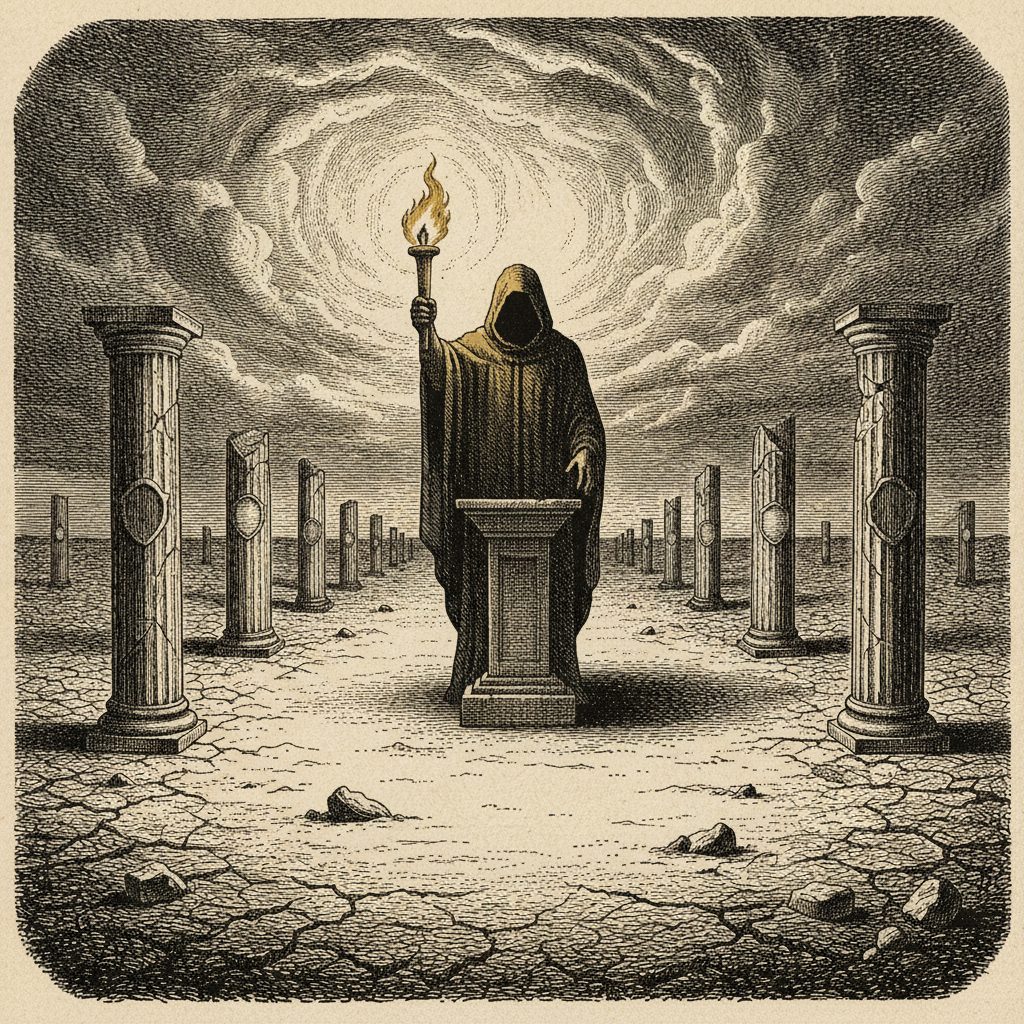
But the deeper trouble isn’t Alito’s alone, and it’s worth seeing past him. Notice what the founders left a record of, and what they didn’t. On what the right is for (the armed citizen, the check on tyranny, self-defense at the core), there’s a record. It’s bitterly contested, but it exists; Heller fought a 5–4 war over it. On how the founding generation actually regulated guns, there’s almost nothing. And the test the Court has built over nearly twenty years asks only for the second thing. It sends every judge hunting for a founding-era regulation to match the modern one, and then, case after case, the Court itself documents that the match isn’t there. Alito reached past an empty shelf. The shelf is the story.
Start with how we got the test. District of Columbia v. Heller (2008) and McDonald v. Chicago (2010) were about meaning. Heller read the text and the history (Blackstone, the ratification debates, the state analogues, the 19th-century treatises) and held that the Second Amendment secures an individual right to keep arms for self-defense, not a militia-bound one. McDonald carried that right against the States through the Fourteenth Amendment.
Bruen (2022) changed the question. It threw out the two-step test the lower courts had settled on (text-and-history first, then means-end scrutiny) and kept only the history. From now on, when a law’s text covers your conduct, the Constitution presumptively protects it, and the Government must prove its regulation “consistent with this Nation’s historical tradition of firearm regulation.” Not the right’s meaning, its regulation. The Government has to lay a modern law beside an old one and show they’re “relevantly similar” in how and why they burden the right. The Court was careful to say this is “neither a regulatory straightjacket nor a regulatory blank check” and that it requires no “historical twin” but a “well-established and representative historical analogue.”
Then Bruen went looking for New York’s analogue, and the search is the most revealing thing in the opinion. Thirty-some pages, from the 1328 Statute of Northampton (which was mostly about wearing armor) through three lonely colonial restrictions, the surety laws, the going-armed-to-the-terror-of-the-people offense. The Court turned over the whole Anglo-American attic and came back with scraps, most of which it then explained away as too old, too local, or too different. That’s not a knock on the opinion. It’s the opinion’s own demonstration. Ask the founding era for gun regulations, and the drawer is nearly empty.
Rahimi (2024) shows what you get when you squeeze what little the drawer holds. The question was whether a man under a domestic-violence restraining order could be disarmed under § 922(g)(8). The founders had no such statute; restraining orders weren’t a category. So the Court reached for the nearest threads it could find, the surety laws and the going-armed laws, and pulled from them a single principle. “When an individual poses a clear threat of physical violence to another, the threatening individual may be disarmed.” Eight Justices signed on. And notice the move. The Court recast the demand for a matching regulation as a question about the “principles that underpin our regulatory tradition.” It climbed that far up the ladder of abstraction because the specific rungs aren’t there. A “historical twin,” Roberts repeated, “is not required.”
That’s the whole of it. Squeeze the founding record for what it permits in the way of disarmament, and you get one thing. You can disarm the dangerous. Not the drinker, not the dissenter, not the user, but the threat. The surety laws and the going-armed laws are about menace, and nothing else in the attic says otherwise. That principle is real, it’s grounded, and it decides cases. It decided Rahimi. And in Hemani the seven never needed more than the analogy’s own failure. They needed no drug-to-drug comparison, no equivalence, nothing beyond the axis Bruen points to.
Which is why Alito’s lapse is the method’s and not just his own. At the frontier (a question the founders never touched, a drug they never scheduled, a category that didn’t exist), there is no regulation to point to. There’s only the principle, dangerousness, and the principle pointed to acquittal. So Alito did what an empty shelf invites. He stopped doing history and started doing resemblance, cannabis to alcohol, now to then, and called it the founding. The barroom syllogism wasn’t a slip of the pen. It’s what’s left when the archive is bare and the judge still has to write something.
Here’s the irony the Court won’t say out loud. Bruen sold history-and-tradition as the disciplined method, the one that takes the decision out of judges’ hands. Means-end balancing was the villain, a “judge-empowering” exercise in weighing costs and benefits the Constitution supposedly forbids. But analogizing from a near-empty record is more judge-empowering, not less. Where the regulations exist, they constrain. Where they don’t, “tradition” becomes a mirror. The judge sees in it whatever he already finds reasonable. Rahimi’s climb to “principles” is the tell. The higher you go toward abstraction, the more the principle is just the modern intuition, attributed to men who never voiced it. Jackson, concurring in Hemani, says it without hedging (Bruen is “unworkable”), and she’d been saying it since Rahimi.
The originalist has a fair answer, and it deserves stating. Sometimes silence is the evidence. If the founders faced a problem and chose not to regulate it, that choice tells you the regulation wasn’t thought permissible. Bruen says exactly this, that the absence of a “distinctly similar” old law is reason to doubt the new one. True enough. But that logic only works when the silence is a choice. The founders didn’t decline to regulate marijuana users, or restraining orders, or machine guns; they never confronted them. Their silence on those questions isn’t a judgment. It’s a vacuum. And a vacuum constrains no one. It gets filled. Usually with an analogy, which is to say, with the judge.
So the Court goes on demanding a founding-era twin, and goes on writing the opinions that prove the twins were never born. For the questions that actually reach the Justices now (not whether you can own a handgun, but who can be disarmed and when), the “historical tradition of firearm regulation” is, for the most part, a tradition of silence. The one thing it clearly says is the thing Alito declined to say. Disarm the dangerous, and leave the rest alone. Everything past that, the Court fills in. It can keep calling the result history. But a method that speaks mostly where the record is empty isn’t reading the Framers. It’s throwing its voice, and calling the dummy James Madison.
Verification
Quotations checked against the slip opinions (Heller via Bruen’s verbatim quotations; Madison via the Avalon Project). Citations clean.
- District of Columbia v. Heller, 554 U.S. 570 (2008). Individual right to keep arms for self-defense in the home; 5–4 (Scalia, J.). The Amendment “codified a pre-existing right”; bans on “dangerous and unusual weapons” and protection of arms “in common use at the time” are historical limits, not the modern prohibited-persons apparatus.
- McDonald v. Chicago, 561 U.S. 742 (2010). Second Amendment incorporated against the States through the Fourteenth; 5–4.
- New York State Rifle & Pistol Assn. v. Bruen, 597 U.S. 1 (2022). Thomas, J., 6–3. Discarded the two-step framework; text-then-history; Government must show a regulation “consistent with this Nation’s historical tradition of firearm regulation” (at 17), “relevantly similar” on “how and why” (at 29), “neither a regulatory straightjacket nor a regulatory blank check,” no “historical twin” (at 30); “judge-empowering” balancing rejected (at 22); absence of a “distinctly similar historical regulation” is evidence of unconstitutionality (at 26–27). The empty-handed historical survey (Statute of Northampton; three colonial restrictions; surety and going-armed laws) runs at roughly 41–70.
- United States v. Rahimi, 602 U.S. 680 (2024). Roberts, C.J., 8–1 (Thomas, J., dissenting). Rejected a facial challenge to 18 U.S.C. § 922(g)(8). “principles that underpin our regulatory tradition” (at 692); “When an individual poses a clear threat of physical violence to another, the threatening individual may be disarmed” (at 698); no “dead ringer” or “historical twin” (at 692); tradition drawn from the surety and “going armed” laws (at 693–700).
- United States v. Hemani, 608 U.S. ___ (2026). Gorsuch, J.; 9–0 in result, 7–2 as to the opinion; Thomas, J., concurring separately; Alito, J., concurring in the judgment (Kagan, J., joining). Alito and majority quotations verified against the slip opinion (see opening). Jackson, J., concurring, writes that “Bruen is unworkable.”
- Federalist No. 46 (Madison), “the advantage of being armed, which the Americans possess over the people of almost every other nation.” Verbatim (Avalon Project; Founders Online).
Thesis note: “Almost nothing” is scoped to the regulatory record (the only thing Bruen’s test demands), not the record of the right’s meaning, which is substantial though contested. The thinness is established out of the Court’s own mouth, in the Bruen and Rahimi surveys.